
Let’s Cut Through the Noise
AI & ML: You hear the terms everywhere. Seriously, everywhere. Your phone uses them. Your email inbox relies on them. Even your bank probably won’t shut up about them. Artificial Intelligence. Machine Learning. They sound like sci-fi movies, right? Honestly, they don’t have to be scary. Therefore, let’s break them down together. Consequently, you will finally understand what all the fuss is about.
First, forget the Hollywood robots. Second, please don’t assume you need a computer science degree. In reality, you need a curious mind. So, grab a coffee. Let’s dive in.
What Exactly Are AI & ML? (No Jargon, Promise)
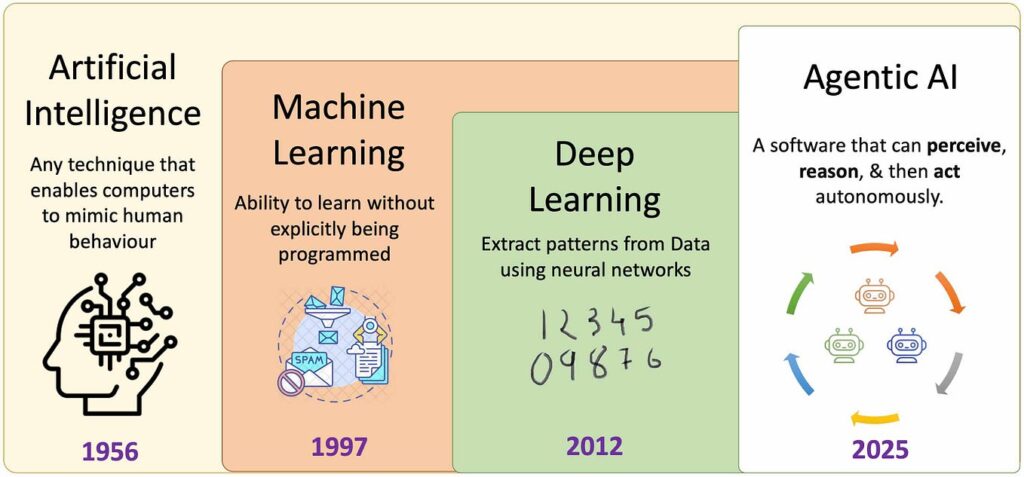
AI & ML Here is the simplest truth. AI stands for Artificial Intelligence. It is a big dream. Above all, AI tries to make machines act smart. For instance, think of a computer that can play chess. Alternatively, imagine a robot that vacuums your floor without falling down the stairs.
Now, ML stands for Machine Learning. Importantly, ML is the actual engine under AI’s hood. Actually, ML is a type of AI. But here is the twist. Not all AI uses ML. Remember the old chess computer? It probably followed strict rules. “If pawn here, then move there.” That was old-school AI.
ML works differently. Instead of following fixed rules, ML learns from examples. For example, you show an ML model one thousand pictures of cats. Additionally, you show it one thousand pictures of dogs. Eventually, it figures out the difference by itself. Consequently, when you show it a new animal, it says “cat” or “dog.” Pretty neat, huh?
If you want to read about Svelte, click here.
AI & ML: Why Should You Even Care?
Let me tell you a short story. Last week, my email filter caught a phishing scam. I didn’t tell it to do that. Certainly, I didn’t write a rule for it. Instead, my email’s ML model learned from millions of previous scams. As a result, it protected me automatically.
Similarly, your Netflix recommendations feel personal. That is ML at work. Also, your bank alerts you about strange purchases. Again, ML. Therefore, you already benefit from these technologies every single day. Without a doubt, understanding them gives you a real advantage.
Teaching Yourself AI & ML
Now, let’s get practical. Consequently, here is your step-by-step how-to manual. Follow these steps actively. Do not just read them. Apply them.
Step 1: Start With the “Why,” Not the “How”
AI & ML First, ask yourself a critical question. What problem do you want to solve? For instance, do you want to predict sales? Alternatively, do you want to sort customer feedback? Maybe you want to automate a boring task.
Write down your goal. Use a pen and paper. Be specific. For example, “I want to know which products will sell best next month.” That is a perfect ML goal. Consequently, your “why” will guide everything else.
Step 2: Learn the Absolute Basics (Without Tears)
Here is the good news. You don’t need calculus tomorrow. Instead, focus on three simple concepts.
Firstly, understand data. Data is just information. For example, a list of temperatures. Or a set of customer ages. ML eats data for breakfast. No data? No learning. It is that simple.
Secondly, learn about features. Features are the characteristics you care about. For a house price prediction, features could be square footage, number of bedrooms, and location. Accordingly, choose your features wisely.
Thirdly, grasp the idea of training. Training means showing examples to the ML model. For instance, you show 500 past sales along with the actual weather on those days. The model looks for patterns. “Ah,” it thinks, “rainy days mean fewer ice cream sales.”
Use free resources. Watch a 10-minute YouTube video on “ML basics for beginners.” Read one blog post per week. Above all, avoid expensive courses until you finish these steps.
Step 3: Play With No-Code Tools Immediately
Do not write a single line of code yet. Seriously, resist the urge. Instead, use tools that do the heavy lifting for you.
Try Google’s Teachable Machine. It takes five minutes. You show it pictures of your face smiling. Then you show it pictures of you not smiling. It learns the difference instantly. You will feel like a wizard.
Next, experiment with Microsoft’s Lobe. Similarly, this tool lets you train an ML model using drag and drop. No programming required. Consequently, you build confidence without frustration.
Finally, play with ChatGPT. Ask it to explain ML concepts like you are ten years old. Furthermore, ask it to give you five practice problems. Treat it like a free tutor.
Step 4: Find a Tiny, Real Project
Learning sticks when you do something real. Therefore, pick a mini-project. Here are three easy ideas.
Idea one: Predict tomorrow’s temperature based on the last seven days. Use a simple spreadsheet. Create a column for yesterday’s temperature. Create another column for today’s temperature. Then, let Excel’s basic forecasting tool guess tomorrow’s number.
Idea two: Sort your email into two folders. Move work emails to one folder. Move personal emails to another folder. Do this for one week. Meanwhile, notice how you make those decisions. You are acting like an ML model yourself.
Idea three: Analyze your monthly spending. Pull three months of bank statements. Circle every coffee purchase. Then, circle every grocery purchase. Finally, ask yourself: could a machine learn to separate these two categories? Absolutely.
Do not aim for perfection. Indeed, your first try might fail. That is completely fine. Failure teaches you more than success.
Step 5: Learn One Coding Language (But Only One)
Eventually, you might want more power. Consequently, learn Python. It is the friendliest language for ML. Do not learn Java, C++, or JavaScript right now. Stick to Python.
Start with the absolute minimum. Learn how to print “Hello, World.” Then, learn how to create a list of numbers. Next, learn how to write a simple loop. That covers 80% of what you need.
Use Google Colab. It is free. It runs in your browser. Importantly, it already has all the ML libraries installed. You will waste zero time on setup.
Practice for 15 minutes every day. Set a timer. Stop when the timer rings. Consistency beats intensity every single time.
Step 6: Build a Ridiculously Small ML Model
After you feel comfortable with Python basics, build your first model. Use a famous dataset called Iris. It contains flower measurements. Additionally, it tells you which species each flower belongs to.
Follow a tutorial titled “Your First Neural Network in 10 Lines of Code.” Copy the code. Run it. Watch it learn. Honestly, you will feel a rush of excitement. That feeling is why people love ML.
Then, modify one small thing. Change the number of training steps. Add a new data point. Break the code on purpose. Fix it again. This hands-on tinkering builds real understanding.
Step 7: Join a Community (Don’t Learn Alone)
Learning alone gets lonely. Moreover, you will get stuck. Therefore, find other learners.
Join r/MachineLearning on Reddit. Follow #MachineLearning on LinkedIn. Search for local meetups in your city. Alternatively, join an online Discord group. Ask dumb questions. Answer someone else’s dumb question. Teaching reinforces your own knowledge.
Above all, find an accountability partner. Text each other once per week. Share one thing you learned. Share one thing you struggled with. This simple habit works wonders.
Common Mistakes to Avoid (Learn From My Mess-Ups)
Let me save you some pain. First, do not collect massive data. Start with 100 examples, not 100,000. Second, do not buy an expensive computer. Your five-year-old laptop works fine. Third, do not compare yourself to experts on Twitter. They have years of experience. Instead, compare yourself to yesterday’s version of you.
Additionally, avoid shiny object syndrome. Do not jump from ML to blockchain to VR. Pick one topic. Stick with it for three months. Only then decide if you want to switch.
AI & ML Frequently Asked Questions (FAQ)
Q1: Do I need to be good at math to learn ML?
Not at first. Seriously, you need only middle-school math to start. Addition, multiplication, and percentages cover most beginner work. Later, you might want to learn statistics. However, do not let math fear stop you today.
Q2: How long does it take to learn the basics?
You can understand core concepts in one weekend. You can build a simple model in two weeks. Then, you can feel genuinely comfortable in three months. Consequently, start today rather than waiting for the “perfect time.”
Q3: Will AI take my job?
AI will not take your job. But a person who uses AI might. Therefore, learn these tools actively. Become that person. Automate the boring parts of your work. Focus your energy on creative, human skills instead.
Q4: Is ChatGPT an example of AI or ML?
Great question. ChatGPT uses both. It relies heavily on a type of ML called deep learning. Additionally, it uses transformer architecture. For your purposes, call it a large language model. And yes, it is absolutely amazing.
Q5: Can I use AI and ML for free?
Absolutely. Google Colab costs nothing. Teachable Machine costs nothing. Python costs nothing. Many free datasets exist online. The only investment is your time. Consequently, there has never been a better moment to start.
Q6: What is the difference between AI and AGI?
AI & ML AI does specific tasks. For instance, plays chess or detects spam. AGI stands for Artificial General Intelligence. It would do any task a human can do. We do not have AGI yet. Furthermore, we might not see it for decades. So, do not worry about robots taking over.
Q7: Should I get a certificate?
Only after you build actual projects. Certificates without skills are worthless. Conversely, a portfolio of three small projects opens doors. Employers want to see what you can do, not what you studied.
Q8: What if I fail at my first project?
Then you succeeded at learning. Failure is data. You learn what does not work. Adjust your approach. Try again. Every expert has failed more times than a beginner has tried.
Your First Action Step (Do It Right Now)
AI & ML: Stop reading. Seriously, close this tab. Open a new one. Search for “Google Teachable Machine.” Spend ten minutes playing with it. Train it to recognize your thumbs-up versus your thumbs-down. Laugh when it gets confused. Feel proud when it works.
Then, come back here tomorrow. Pick one project from Step 4. Dedicate 20 minutes to it. Write down one question you have. Share that question in an online community.
Above all, remember this: every expert started exactly where you are now. They felt confused. They made mistakes. Then, they almost gave up. But they kept going. Consequently, you can too.
Final Thoughts
AI and ML are not magic. They are tools. Powerful tools, yes. But tools nonetheless. You use tools every day. A hammer. A calculator. A calendar. Now, add ML to your toolbox.
The best time to learn was five years ago.AI & ML. The second best time is today. So, take that first step. Build something small. Fail fast. Learn faster. Share your journey with others.
You have everything you need already. A curious brain. A working computer. An internet connection. That is enough. Truly, it is.
Now go build something interesting. And please, send me an email when you do. I genuinely want to celebrate your first success.