
Introduction
Nanobots are tiny machines. They work at the nanoscale. This means they are smaller than a cell and can enter the body. Then, it can fix problems inside, it can deliver drugs, and fight diseases. Then, it can clean the environment. Moreover, these are changing science, medicine, and the industry. This blog will show you how to use these.
What Are Nanobots?
These are robots and small robots. They are about 50 to 100 nanometers wide. Additionally, These can sense things, and do tasks. These are made from special materials. They can be made from DNA. They can be made from other molecules. Furthermore, these can work alone or in groups. They can be programmed. They can follow commands.
How Do Nanobots Work?
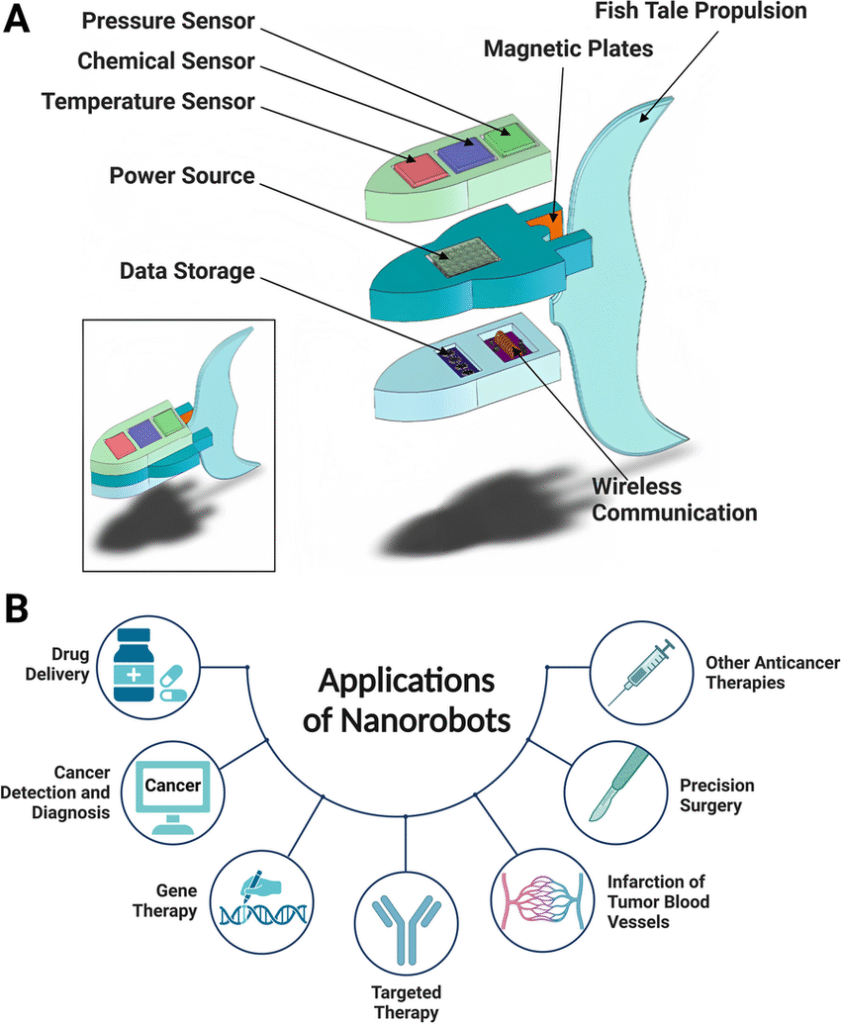
Additionally, these use sensors. They use motors, use tiny parts, and find targets in the body. Then, it can deliver drugs. They can kill bad cells and repair tissues. Moreover, some use magnets and some use chemicals. Furthermore, Some use light, and some use sound. Then get power from the body, or from outside. They can be controlled by doctors or computers.
If you want to read about Custom Chips, Click Here.
How to Use Nanobots
Step 1: Identify the Problem
Firstly, you need a goal. Do you want to treat a disease? Or to clean water? Or fix a machine? Decide what you want to do.
Step 2: Choose the Right Nanobots
Secondly, pick them for your task. Some deliver drugs or kill cancer cells. Then, some can clean pollution. Each one has a job.
Step 3: Program Nanobots
Thirdly, It needs instructions. You can program them, and tell them where to go, and what to do. Then, You can use computers or special tools.
Step 4: Deploy
Fourthly, put it where it is needed. In medicine, doctors inject these. Moreover, In the environment, scientists release them into water. Then, industry engineers use them in machines.
Step 5: Monitor
Then, watch the nanobot work. Use sensors. Furthermore, use computers. Make sure it does its job. Then, make sure it is safe.
Step 6: Remove or Deactivate
After the job, Then, remove the nanobot. Or, make it break down. Or, make it leave the body. This keeps things safe.
Where is it used?
- Firstly, Medicine: It delivers drugs, and kills cancer cells. Then, repair tissues and help with surgery.
- Secondly, Environment: It has clean water. They remove toxins. Then break down waste.
- Thirdly, Industry: These build small parts. They fix machines. They make new materials.
- Research: Then, It studies cells. They help with experiments. They find new things.
Benefits of Nanobots
- Precision: Firstly, these only target bad cells. They do not harm good cells.
- Speed: Secondly, these work fast. They can treat the disease quickly.
- Small Size: Thirdly, go where big tools cannot.
- Fewer Side Effects: Fourthly, reduce harm. Then, lower drug side effects.
- Versatility: They can do jobs in many fields.
Risks and Challenges
- Safety: It may cause immune reactions and harm healthy cells.
- Control: It is hard to control nanobots. They may go to the wrong place.
- Cost: Nanobots are expensive and hard to make.
- Regulation: There are a few rules, that need more laws for nanobots.
- Ethics: Who can use these? Who controls them? These are big questions.
Medicine
These are changing medicine. It can find the disease early. Additionally, they can deliver drugs to one spot and can repair tissues. They can help with surgery and monitor health. Doctors can use these to treat many problems. Moreover, these can help people live longer. They can help people live better.
Environment
Additionally, these can clean water. They can remove toxins, break down waste, help fight pollution, and remove plastics from the oceans. Moreover, they can clean up oil spills, and help save the planet.
Industry
It can build small parts to fix machines. They can make new materials, and make things stronger. Then it can help make things faster.
How is it powered?
Nanobots need power, and use chemicals in the body. Some use light, and sound, use tiny batteries. Some get power from outside. Power is a big challenge for nanobots.
How are they controlled?
Additionally, Nanobots can be controlled by computers or by magnets. They can be controlled by light. or controlled by sound. Then, Doctors can use machines to guide them. Scientists can use special tools.
Are these Safe?
Moreover, these are new. We do not know all the risks. It may cause harm, and then cause immune reactions. Furthermore, some may go to the wrong place. Scientists are working to make them safe.
Advantages and Disadvantages Table
| Advantages | Disadvantages |
|---|---|
| High precision | High cost |
| Fast action | Safety risks |
| Small size | Hard to control |
| Less side effects | Few regulations |
| Many uses | Ethical issues |
Frequently Asked Questions (FAQ)
What are nanobots?
Nanobots are tiny robots. Then, they work at the nanoscale. They can do many tasks.
How do these enter the body?
Doctors inject them. Sometimes, they are swallowed. Sometimes, they are put on the skin.
Can it cure cancer?
These can target cancer cells. Then, can deliver drugs. They can kill cancer cells.
Are these safe?
Nanobots are still new. Moreover, some risks exist. More tests are needed.
How are these powered?
They use chemicals, magnets, light, or sound. Some use tiny batteries.
Can these removed?
Yes. A breakdown in the body. Furthermore, some are removed by doctors.
What are the main uses of these?
Medicine, environment, industry, and research.
Are nanobots expensive?
Yes. They are hard to make. Then, it cost a lot.
Who controls nanobots?
Doctors, scientists, and engineers control them. Computers help too.
Will nanobots change the world?
Yes. They can help people. Moreover, it can help the planet. They can change many things.
The Future of it
These are growing fast. These markets are growing each year. More uses are coming, and tests are happening. Moreover, rules are needed, and people will use nanobots. Then it helps in new ways and changes medicine. They will change the industry. Then, the future is bright for nanobots.
Conclusion
Nanobots are small. But they are powerful. Additionally, It can do big things, help people and the planet. and can change the world. But we must use them with care. Then, must learn more. It must make them safe. We must make them fair. Nanobots are the future. Get ready for the nanobot age.