
Introduction
Climate modeling enables us to predict future climate changes and comprehend Earth’s complex systems. But how do these models work? What do they need to run? And how accurate are they? This guide breaks down the essentials in simple terms, answers top questions, and explains why climate models matter.
Additionally, it helps scientists predict future climate changes. Think of it like a giant computer simulation of Earth’s weather systems. Moreover, these models utilize math, physics, and real-world data to forecast a range of phenomena, including temperature increases and intensified storms.
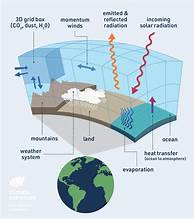
Climate Modeling: Why Should You Care?
- Predicts Future Risks – Shows where floods, heatwaves, or rising seas could hit hardest.
- Guides Decisions – Helps governments and cities prepare for climate disasters.
- Tests Solutions – Models reveal how cutting pollution or planting trees could slow warming.
How Do Climate Models Work? (Simple Steps)
Firstly: Build a Virtual Earth
- Scientists split the planet into a 3D grid (like a Rubik’s Cube).
- Then, each cube tracks temperature, wind, rain, and ocean currents.
Secondly: Add the Rules
- Firstly, models use physics laws (like how heat moves or air flows).
- Secondly, computers solve millions of equations to predict changes.
Thirdly: Test & Improve
- Moreover, run the model with past data to check accuracy.
- Then, adjust details (like ice melt speed) to match real-world trends.
Climate Modeling: What’s Needed to Run a Model?
| Past weather records, ocean temps, and pollution levels. | Why It Matters |
|---|---|
| Powerful Computers | Heavy math needs super-fast processors. |
| Good Data | Past weather records, ocean temperatures, and pollution levels. |
| Smart Scientists | Experts tweak models to avoid errors. |
If you want to read about Carbon Capture, Click Here.
FAQ – Quick Answers
Q: Are climate models reliable?
✅ Yes, for big patterns—they correctly predicted today’s warming.
⚠ But not perfect— small details (like exact rain in your town) are fuzzy.
Q: Why do models disagree?
- Firstly, some focus on oceans, others on air currents.
- Then, Different assumptions (like how clouds form).
Q: Can models predict a hurricane in 2050?
No, but they can say hurricanes will likely get stronger.
Q: How far ahead do they forecast?
- Weather models: Days.
- Climate models: 50–100 years.
Climate Modeling Limitations (Be Aware!)
- Local forecasts are rough (e.g., mountain weather).
- Some processes are still guesswork (like cloud changes).
Key Takeaways
Models = math + data + supercomputers.
Then, they help us prep for heat, floods, and rising seas.
No single model is perfect, but together, they warn us wisely.
Want to explore? Try free tools like NASA’s Eyes on Earth!
Final Tip: Always compare multiple models. The future isn’t certain, but science helps us plan smarter.