
Introduction: Why Your YouTube Channel Needs a Strategy
So, you want to make YouTube marketing work for your business. First, you might feel overwhelmed. However, starting with a clear plan turns confusion into confidence. Specifically, YouTube is a powerful search engine and community platform. Therefore, treating it as a core part of your marketing is essential. In this guide, we will walk through practical steps. Consequently, you will learn to attract viewers, engage an audience, and achieve your goals. Let’s begin this journey together.
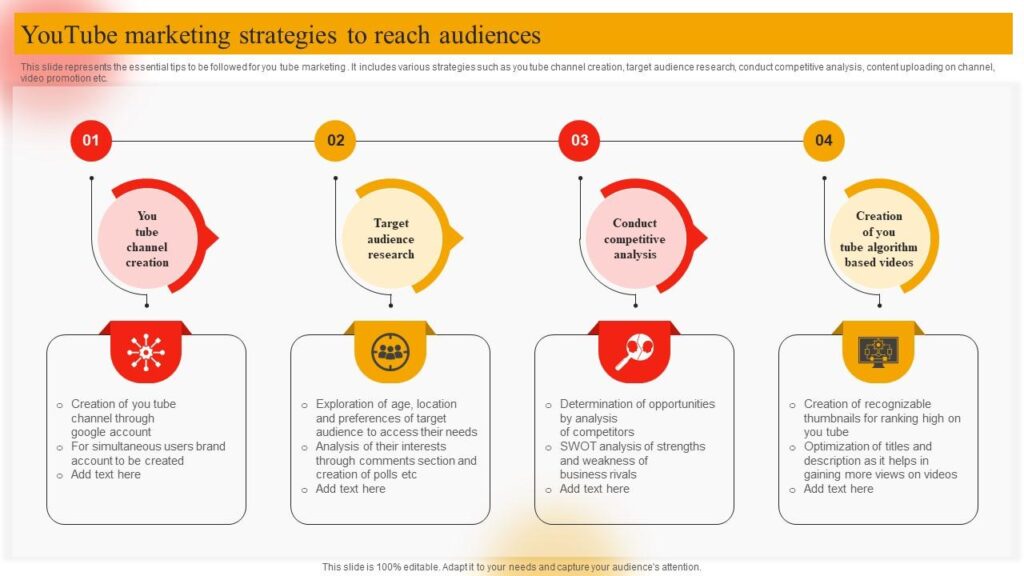
Step 1: Define Your Channel’s Core Purpose
First and foremost, you must define your channel’s purpose. In other words, ask yourself: why does this channel exist? For instance, is your goal to generate leads, build brand authority, or drive direct sales? As a result, this clarity shapes every video you create.
Next, identify your target viewer. Specifically, imagine one ideal person. What are their problems? How can you solve them? Consequently, your content will resonate more deeply.
If you want to read about how to create an account on Shopify, click here.
Step 2: Master YouTube as a Search Engine
Remember, YouTube is the world’s second-largest search engine. So, you must optimize for discovery. To begin, conduct keyword research. For example, use tools like Google Keyword Planner or TubeBuddy. Look for search terms with good volume but manageable competition.
Then, apply these keywords strategically. Specifically, place your main keyword in three vital spots: your video title, your description’s first sentence, and your video file name before uploading. As a result, YouTube’s algorithm better understands your content.
Step 3: Craft Videos That Captivate and Keep Attention
Now, let’s discuss content creation. Above all, your opening is crucial. You have about 8 seconds to hook a viewer. So, start with a compelling question, a surprising fact, or a clear promise of value. For instance, say, “Today, I’ll show you the one mistake that’s killing your YouTube growth.”
After your hook, deliver structured value. Use clear sections and on-screen graphics to break down information. Similarly, speak in a conversational, energetic tone. Consequently, viewers are more likely to watch until the end.
Most importantly, always include a clear call-to-action (CTA). Tell viewers exactly what to do next. Do you want them to subscribe, comment, or click a link? For example, say, “If you found this helpful, subscribe for more tips every Tuesday.” Thus, you guide their journey on your channel.
Step 4: Design Thumbnails That Demand Clicks
Meanwhile, your thumbnail works with your title. Together, they are your video’s advertisement. First, use high-contrast colors that pop. Bright yellows, reds, and whites often perform well against YouTube’s white background.
Next, feature a clear, close-up human face showing genuine emotion, like curiosity, joy, or surprise. Humans naturally connect with faces. Therefore, this builds an immediate, subconscious bond.
Additionally, use minimal, bold text. If you use words, limit them to three or five large, readable words. For instance, “My #1 Tip” or “Free Guide Inside.” However, never use clickbait. Your thumbnail must accurately represent your video’s content. Otherwise, you will hurt your watch time and channel reputation.
Step 5: Build a Loyal Community Through Engagement
Furthermore, YouTube rewards channels that foster community. So, you must actively engage. Start by asking a question in your video. Then, pin a comment to kickstart the conversation. As a result, you signal to the algorithm that your video is a discussion hub.
Respond to comments promptly and personally. Thank people by name. Answer their questions. Consequently, viewers feel valued and are more likely to return.
Also, utilize other YouTube features. Use Community Posts for polls and updates. Go live for Q&A sessions. By doing this, you maintain a connection between video uploads. Therefore, your channel stays active in subscribers’ minds.
Step 6: Analyze Your Data and Refine Your Approach
After publishing, your work is not done. Now, you must analyze performance. Regularly check your YouTube Analytics dashboard. Focus on key metrics like Impressions, Click-Through Rate (CTR), and Average View Duration.
For example, a low CTR means your thumbnail/title pair isn’t working. So, you should test new designs. Conversely, a low View Duration means viewers lose interest. Therefore, you need to improve your content’s pacing or structure.
Step 7: Promote Your Videos Beyond YouTube
Finally, do not rely solely on YouTube’s algorithm. Actively promote your content elsewhere. Share your video on all relevant social media platforms. For instance, post an engaging clip on LinkedIn, TikTok, or Instagram Reels with a link to the full video.
Similarly, embed your videos in related blog posts on your website. This boosts your website’s SEO and gives the YouTube video more views. It’s a win-win.
Moreover, repurpose your content. Turn a video script into a newsletter article. Extract short tips for Twitter. Consequently, you get maximum value from every piece of content you create.
Conclusion: Your Path to YouTube Success
In conclusion, making YouTube marketing work is a process. It requires strategy, consistency, and a focus on your audience. Start with one step from this guide. Implement it fully. Then, add the next step. Be patient, because growth takes time. However, by providing real value and connecting genuinely, you will build a channel that serves your viewers and your business goals. Now, go create something amazing.
Frequently Asked Questions (FAQ)
Q: How many videos do I need before I start seeing results?
A: Consistency is more important than volume. First, focus on a sustainable schedule, like one video per week. Then, prioritize quality. The algorithm needs data to understand your channel. So, after about 10-15 quality videos, you should start seeing clearer patterns and traction.
Q: What is the best video length for the YouTube algorithm?
A: The “best” length is the one that fully covers your topic while holding attention. However, for tutorials and educational content, aim for 8-12 minutes to allow for depth. For entertainment or vlogs, 5-8 minutes is often effective. Always check your own Audience Retention graph to see what works for your specific viewers.
Q: Is it worth paying for YouTube ads to promote my channel?
A: Yes, but strategically. Use a small budget to promote your very best video, a “hero” piece of content that showcases your value. Target viewers based on interests related to your niche. The goal is not just views, but to drive subscribers who will watch your future organic content. Think of it as seeding your audience.
Q: How important are video chapters and closed captions?
A: Extremely important. First, chapters improve user experience by letting viewers jump to sections, which can increase total watch time. Second, closed captions (subtitles) are crucial for accessibility, for viewers watching without sound, and for SEO, as YouTube’s AI crawls this text. Always add both.
Q: Can I use music from popular artists in my videos?
A: No, not unless you have explicit commercial licensing. To avoid copyright strikes, use royalty-free music from libraries like YouTube’s own Audio Library, Epidemic Sound, or Artlist. Always check the licensing terms before using any music.
Q: What should I do if my views suddenly drop?
A: Don’t panic. First, check for technical issues or community guideline strikes. Then, look at broader trends: have you changed your content style? Has your niche seen a seasonal dip? Often, this is a normal fluctuation. Stay consistent, focus on your best topics, and engage with your community.