
Introduction
Imagine a surgery with tiny cuts. Now, imagine faster healing because of it. This is not science fiction. This is real life today, thanks to medical robots. So, patient care is getting much better.
But this is not about replacing doctors. Instead, it is about giving them better tools. Therefore, people and machines are working together. As a result, patients are seeing amazing results.
How do these robots help? Let’s look at the many ways.
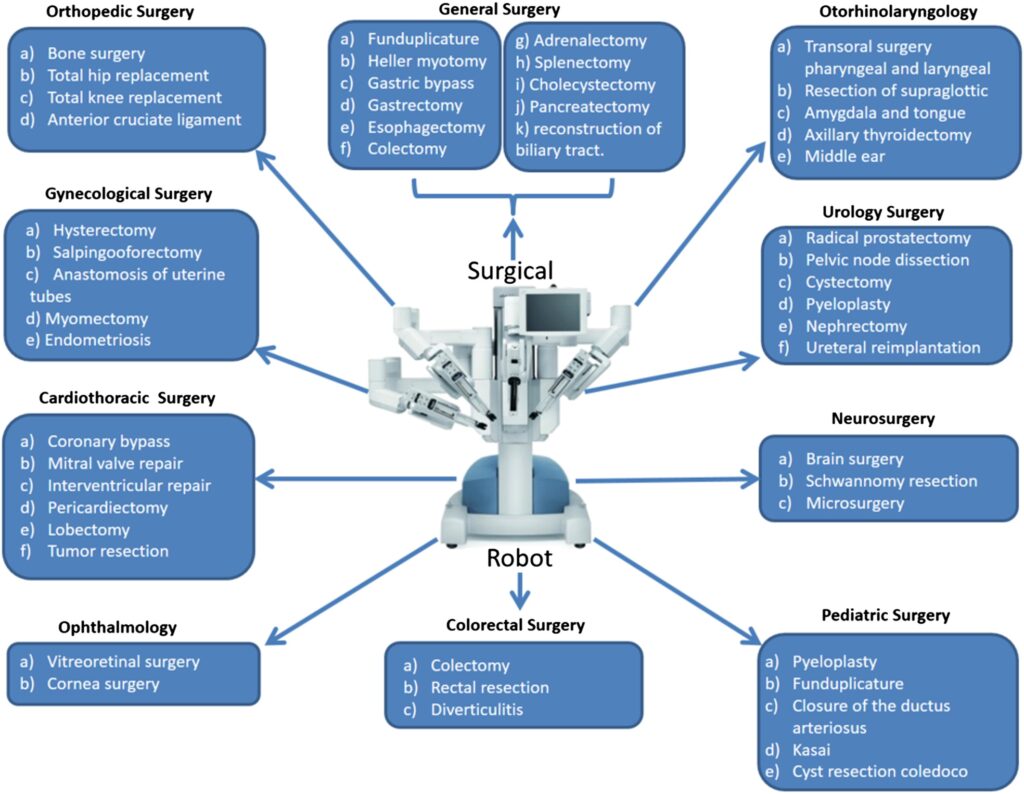
1. Super Precision in Surgery medical robots
First, robots help greatly in surgery. For example, the da Vinci Surgical System is very precise. Specifically, a surgeon sits at a console. Then, they control the robot’s arms. Meanwhile, the robot makes its movements smaller and steadier.
Because of this, surgeons can use very small cuts. This is called minimally invasive surgery. Consequently, patients feel less pain. Also, they lose less blood. Furthermore, infection risk drops because the wound is small.
If you want to read about using free ElevenLabs, click here.
2. Medical Robots: Faster Recovery for Patients
Moreover, the benefits continue after surgery. Since the cuts are small, the body heals faster. Therefore, patients leave the hospital sooner. In addition, they return to normal life quickly. This is good for the patient and also saves money.
3. Medical Robots: Fewer Mistakes with Medicine
Next, robots make hospitals safer. For instance, pharmacy robots pack medicines. These robots rarely make errors. As a result, medical mistakes become very rare.
Similarly, lab robots test samples all day and night. They are always accurate. Because of this, doctors get results fast. This speed means treatment can start quickly, which helps patients greatly.
4. Medical Robots: Better and Consistent Therapy
Also, robots help with physical therapy. Recovering from a stroke takes many repeated movements. However, human therapists get tired. But robots do not.
For example, robotic devices can move a patient’s arm again and again. So, patients get the practice they need. Therefore, their recovery is often faster and better.
If you want to read about a biotech career, click here.
5. Reaching Patients Everywhere
Finally, robots help with distance. Some robots have video screens and wheels. A doctor can drive them from far away. Then, they can see a patient in another town.
This means expert care can go anywhere. Consequently, patients in rural areas get help easily. Instead of traveling for hours, they see a doctor instantly.
Frequently Asked Questions (FAQ)
Q: Do robots do the surgery alone?
A: No, not at all. Always, a surgeon controls the robot. So, the robot is just a very advanced tool.
Q: Is surgery with robots safer?
A: Often, yes. Because the cuts are smaller, there is less risk. But, the surgeon’s skill is still most important.
Q: Will robots take jobs from nurses?
A: Actually, no. Instead, they do repetitive jobs. Therefore, nurses have more time for patient care.
Q: Will insurance pay for robotic surgery?
A: Usually, yes. Many insurance companies cover it. But always check with your provider first.
Q: Do therapy robots work?
A: Yes, they do. Studies show that patients using them often recover movement faster.
Conclusion: Better Care for Everyone
In short, robots are not taking over. Instead, they are helping. They do precise and repetitive jobs perfectly. So, doctors and nurses can focus on people.
This means better care, fewer errors, and quicker healing. Ultimately, robots are helping to create a future where everyone gets the best medical care possible.